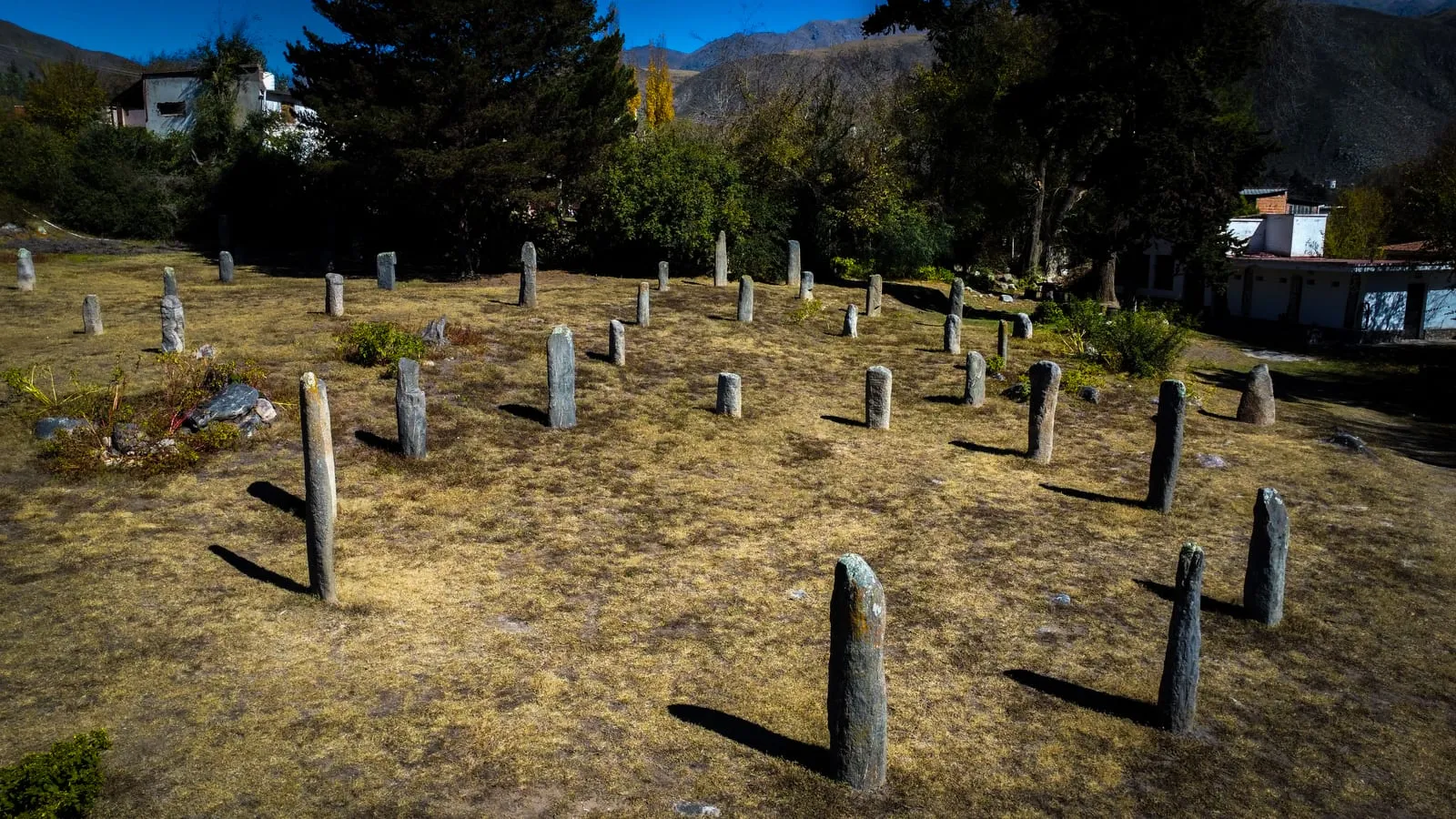
In the heart of the Tafí Valley, at over 2,000 meters above sea level, stand the oldest menhirs in Argentina. These stone monoliths, some rising more than 3 meters tall, were carved by the Tafí culture over 2,000 years ago.
The Tafí culture inhabited the valley between 300 BC and 800 AD, long before the arrival of other Andean cultures such as the Diaguitas. They were farmers and herders who developed a unique system of social organization, leaving behind these enigmatic monoliths as their most enduring legacy.
What do the menhirs represent? This question has fascinated archaeologists since the nineteenth century. Some theories suggest they were territorial markers; others propose they represented ancestors or protective spirits. What we know with certainty is that many of them bear carved faces: eyes, noses, mouths, and in some cases, ornaments and headdresses.
The Menhir Park, established in the 1970s, brings together more than 100 of these monoliths, relocated from various points across the valley. Although the relocation was controversial -- the menhirs lost their original context -- it allowed them to be preserved and studied systematically.
What makes the menhirs most compelling is that they did not stand alone. Excavations have found them associated with stone circles, mounds, and structures that suggest ceremonial spaces. Some researchers propose they formed part of a broader sacred landscape, where each element held a specific meaning.
On our excursions to the Tafí Valley, we visit the Menhir Park with expert interpretation. We explain the different theories, point out the details of the carvings, and connect these monuments to the Andean worldview that still endures in the region.