At over 5,000 meters above sea level, in the heart of the Catamarca Puna, the Galán Volcano holds a record few are aware of: its 40-kilometer-wide caldera is the largest in the world. To put it in perspective, a city the size of Buenos Aires could fit comfortably inside it.
Galán erupted approximately 2.5 million years ago in an event of almost unimaginable proportions. The explosion was so violent that it expelled over 1,000 cubic kilometers of volcanic material -- a volume that far exceeds the most famous eruptions in modern history.
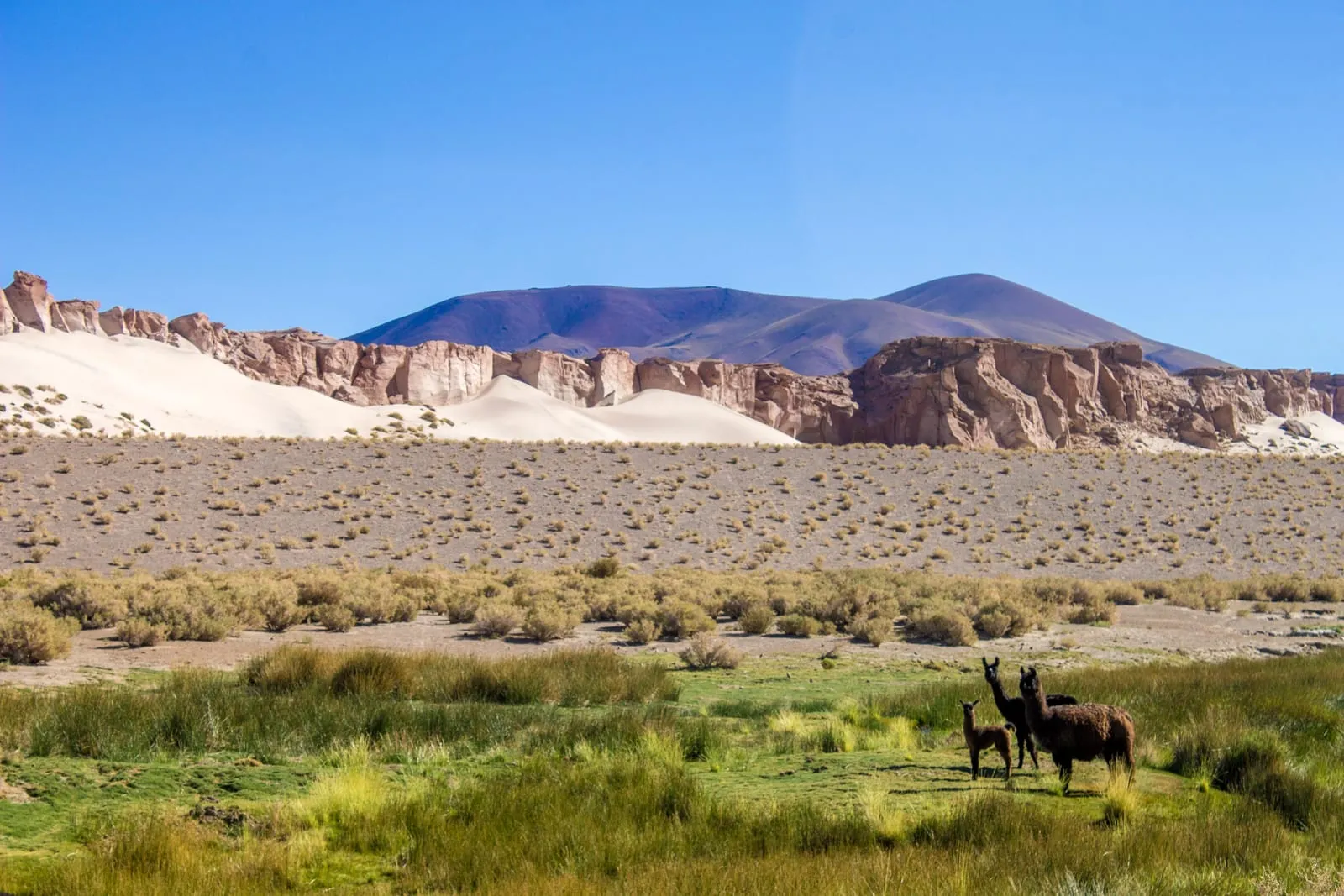
What remains today is a landscape that looks like another planet. The caldera is ringed by peaks exceeding 5,900 meters, while its interior shelters intensely colored lagoons where pink flamingos feed in silence. The contrast between the extreme aridity and the life that persists is awe-inspiring.
But Galán is not just geology. In its surroundings, evidence of human presence dating back thousands of years has been found. The indigenous peoples of the Puna knew this landscape, traversed it, and likely revered it. The paths we walk today carry thousands of years of history.
Reaching Galán requires a journey across the Puna that is itself an experience: pumice stone fields, salt flats, wild vicuñas, and a night sky where the Milky Way reveals itself as in few other places on Earth.
On our Mallku Experience 4x4, we explore this region over 4 days, combining the extreme geology of Galán with archaeological sites such as El Shincal de Quimivil and the ruins of Antofagasta de la Sierra. It is a journey for those who seek the extraordinary.