When we speak of the Diaguitas, we are not speaking of a single people but of a confederation of nations that shared a language (Cacán), a territory, and certain cultural traits. Quilmes, Amaichas, Pacciocas, Tolombones, Yocaviles: each group had its own identity, its own territory, and its own leaders, but in the face of external threats they could unite into a formidable force.
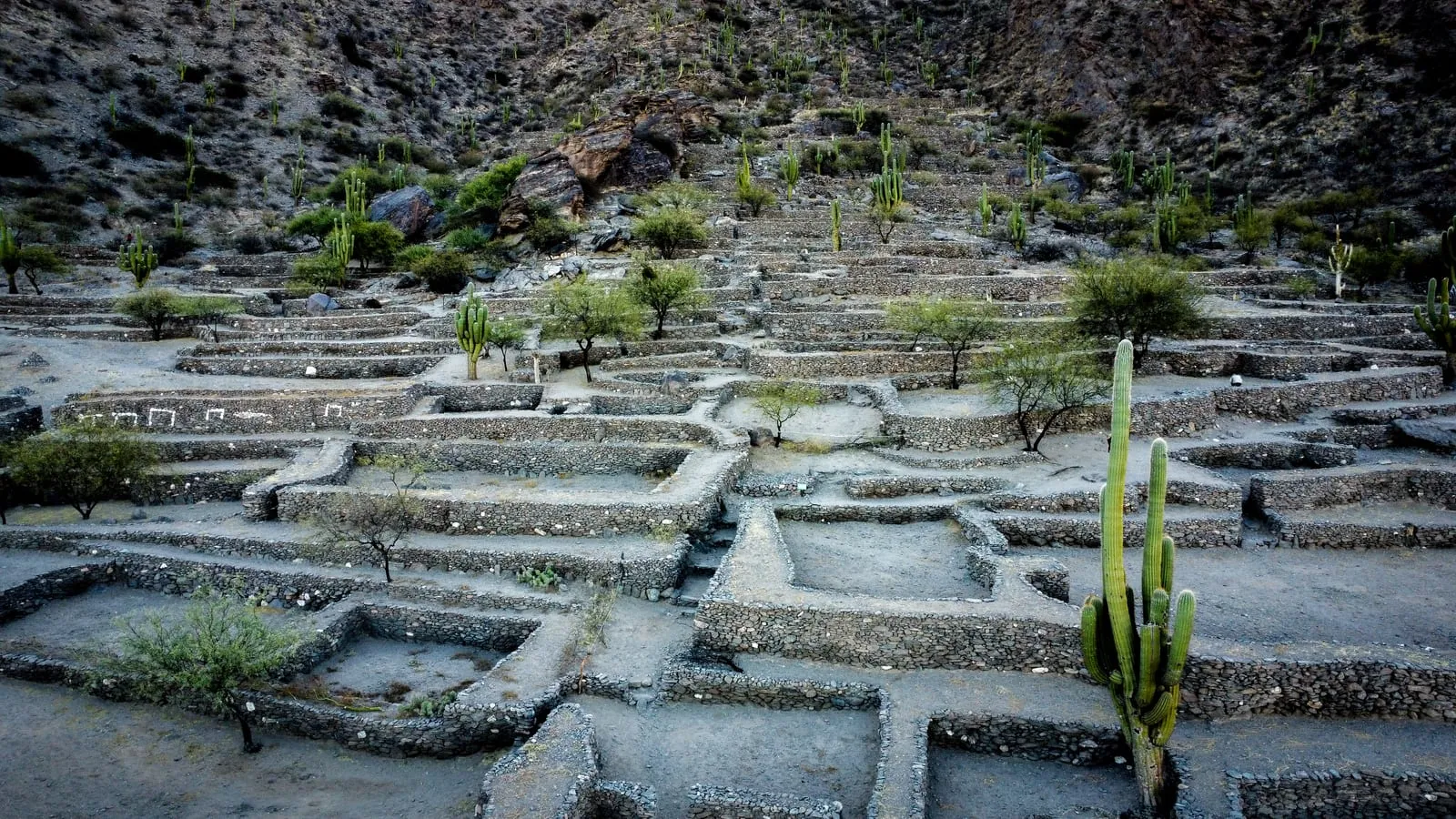
The Diaguitas inhabited the Calchaquí Valleys and surrounding areas from roughly the ninth century until the Spanish conquest in the seventeenth century. They were sophisticated farmers who developed canal irrigation systems, cultivated maize, squash, beans, and quinoa, and supplemented their diet by hunting guanacos and gathering algarroba pods.
Their political organization was decentralized: each community had its own curaca (chief) and its own territory. There was no central authority as in the Inca empire. This structure gave them flexibility but also made it difficult to unite against common enemies. When the Incas reached the NOA in the fifteenth century, some Diaguita peoples resisted while others negotiated.
Diaguita art is one of their most visible legacies. The Santamariana funerary urns, with their geometric designs and anthropomorphic figures, are pieces of remarkable aesthetic sophistication. Every museum in the NOA holds examples, but seeing them in context -- in the valleys where they were created -- gives them an entirely different meaning.
Diaguita resistance against the Spanish conquest was the longest in Argentine history. The Calchaquí Wars (1562-1667) lasted over a century and involved alliances, betrayals, battles, and diplomacy. The Quilmes, one of the Diaguita peoples, were the last to fall. Their punishment was meant as an example: they were deported on foot all the way to Buenos Aires.
Today, Diaguita descendants remain present throughout the NOA. Communities in Tucumán, Catamarca, and Salta keep their identity alive and fight for recognition of their territorial rights. The landscape we traverse on our excursions was shaped by these peoples over centuries: the paths, the sites, the agricultural terraces -- everything speaks of a presence that was never erased.
On our excursions, we do not tell the Diaguita story as something from the past. We tell it as what it is: the foundation upon which everything that followed in the NOA was built.