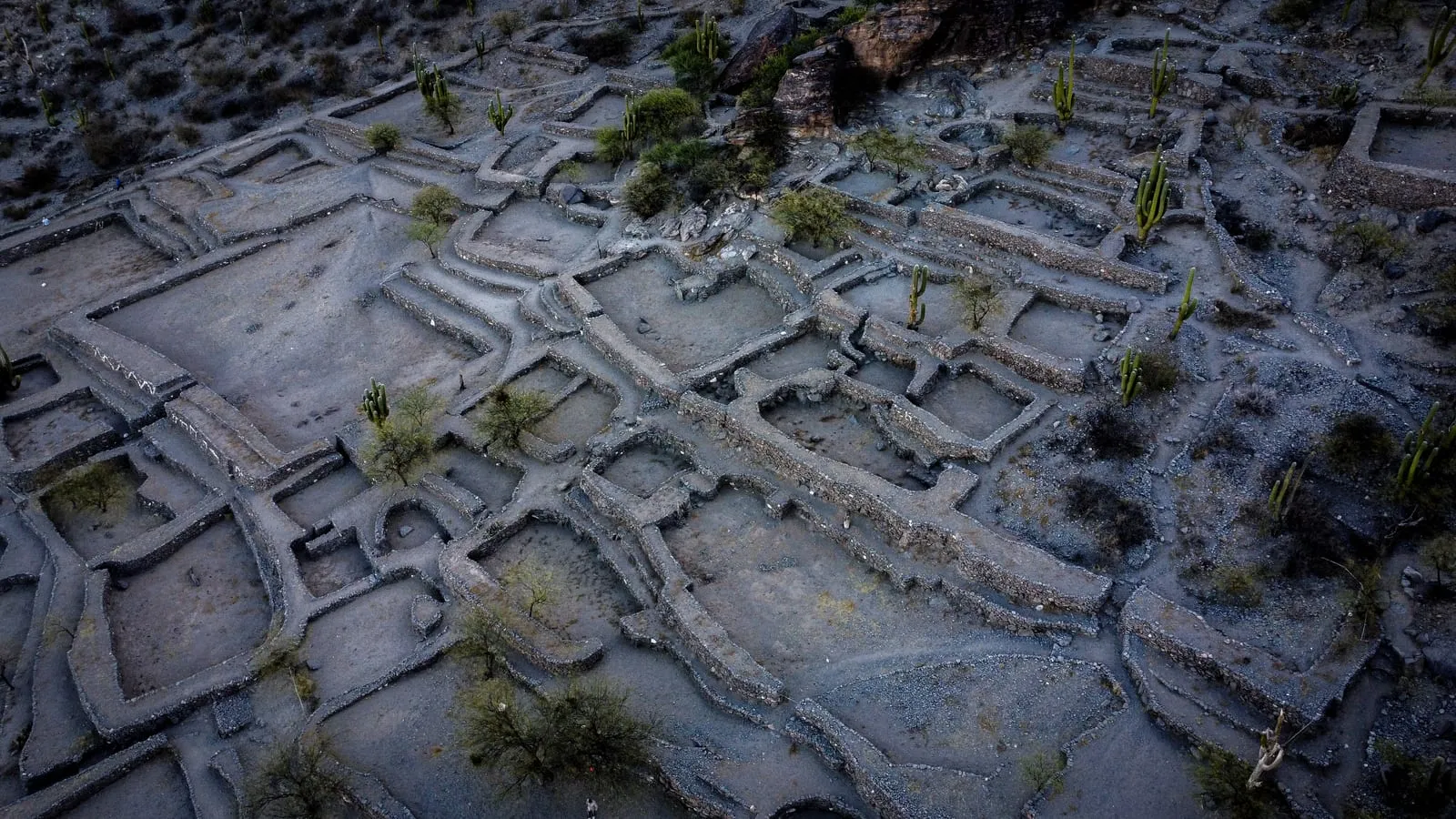
Quilmes is not just an archaeological site. It is the most imposing testament to Calchaquí resistance against the Spanish conquest. This fortified city, nestled in the Calchaquí Valleys of Tucumán, was home to more than 5,000 people at the height of its splendor.
The Quilmes were part of the Diaguita people, a confederation of nations that inhabited northwestern Argentina. Their city, built across the slopes of Cerro Alto del Rey, was strategically designed: agricultural terraces on the lower levels, dwellings on the hillsides, and observation posts on the summits.
What makes Quilmes truly remarkable is its history of resistance. When the Spanish arrived in the valley in the mid-sixteenth century, the Quilmes refused to submit. For over 130 years they fought back, forging alliances with other Diaguita peoples in what became known as the Calchaquí Wars.
It was not until 1667, after three major wars and multiple military campaigns, that the Spanish finally subdued the Quilmes. But the conquest did not end there: the punishment was brutal. More than 2,000 survivors were forced to march on foot to Buenos Aires, where they were resettled in a colonial reduction that today bears their name -- Quilmes, the city on the outskirts of Buenos Aires.
To walk among the ruins of Quilmes today is to walk through the living history of a people who never surrendered easily. The terraces, the grinding stones, the walls -- everything speaks of a society that was organized, prosperous, and deeply connected to its land.
On our excursions, we do more than tour the site: we interpret it. We tell the story that the signs don't -- the political decisions, the alliances, the betrayals, and the lasting impact this process had on shaping northwestern Argentina as we know it.